

From gastronomy for gut health to gastroenterology
Dr Kerith Duncanson

Travelling overseas is a privilege and a passion that gives perspective and can redefine our purpose in work, and in life. Going through treatment and surgeries related to bowel cancer in 2023, I wondered if I would ever feel confident enough to travel overseas again. At the same time, the experience gave me pause to consider what I value most – enjoying good food and travel were high on that list. The restrictions imposed by living with an Ileostomy for 9 months made me appreciate my food and my gut health more than ever.
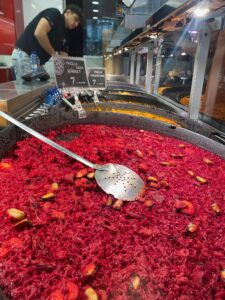
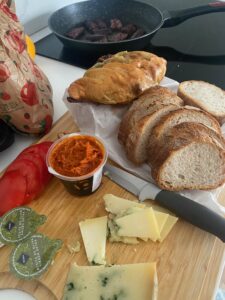
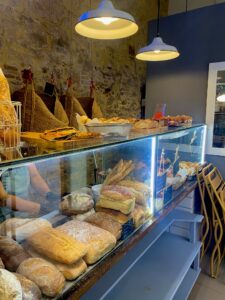
Fast forward three years to October 2026, and I worked up quite an appetite riding a bike up very big hills in the Costa Blanca region of Spain, the gastronomic hub of a food and wine loving nation. What I noticed in this region is that seafood is king; legumes, nuts, vegetables and fruits are used in clever ways, markets still reign over supermarkets and grocery shopping is social and joyful. Importantly, eating and drinking happens at a slower pace – we only saw one person order a take-away coffee in Spain in a month.
People sit to drink (and eat) and then walk after meals, which we know is also great for digestion. There is also very little snacking between meals, even for example at a football game. People seemed to watch the game then go to a cafe to debrief, and share a meal and drinks. I’m not judging this as either good or bad, just interesting!
My favourite dishes have been;
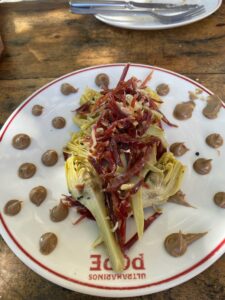
- Grilled artichoke with black garlic aioli
- Sweet potato bravas with chilli
- Crispy whole fish (sardines, whitebait) – a tasty alternative to collagen or calcium supplements

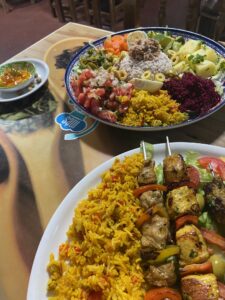
I then travelled to Barcelona for the United European Gastroenterology conference, to learn about the latest research and advances in gastroenterology science.
The biggest breakthroughs seem to have been in therapies for IBD, possible treatments for coeliac disease, new mechanisms being uncovered to help explain disorders of gut brain interaction, along with new diagnostic criteria and categories (more on all that in future blogs).
Together, these experiences made me wonder whether the Spanish version of the Mediterranean diet or the lifestyle that influences risk and management of disorders of gut brain interaction like IBS in Spain.
While IBS is common across Mediterranean countries, the prevalence is a bit lower in Spain: (8-10%) than the worldwide average of around 15%. It would be fair to assume that all those FODMAP-y foods may result in a higher rate or severity of IBS, in actual fact Mediterranean dietary patterns are emerging as a potentially useful and sustainable dietary approach for IBS management, particularly compared with highly restrictive diets, although individual FODMAP tolerance needs to be taken into consideration.
Importantly, the core principles of the Mediterranean diet and the lifestyle factors I noticed in Spain can be adapted across cultures by emphasizing locally available minimally processed foods, abundant plant foods, legumes, whole grains, nuts and seeds, healthy unsaturated fats, moderate amounts of fish or other protein-rich foods, and shared, enjoyable eating practices.
Rather than focusing on specific Mediterranean foods, the key is applying the dietary pattern within traditional cuisines, such as soy foods and vegetables in East Asian diets, beans and maize in Latin American diets, or lentils and pulses in South Asian diets, while limiting ultra-processed foods and maintaining a predominantly plant-based eating pattern.
Learn more:
For some helpful tips about embracing Mediterranean style eating – wherever you like and whatever foods you like – there are some excellent ideas and recipes here: Mediterranean Diet for IBD & GI Health | GI Nutrition Foundation


Contact Us
Email – office@helpyourself.com.au